h1

The Best Films of the 1990s

November 8, 2009

With just a few weeks of this decade still to go I’ve got to get my skates on coming up with a list of my favorite films of the ’00s and to be honest I’m not really looking forward to it. So in lieu of that for now I have dug up my Best of the ’90s list which, I’m happy to say, I still stand by ten years later. I never would have thought the ’90s were a particularly strong decade for cinema but I doubt my top ten of the ’00s is going to be anywhere near as strong as this.


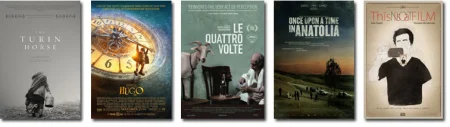
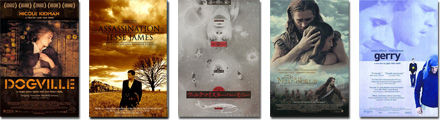
Bestof90sA

1. A BRIGHTER SUMMER DAY (Edward Yang, Taiwan, 1991)
2. SATANTANGO (Bela Tarr, Hungary, 1994)
3. NAKED (Mike Leigh, UK, 1993)
4. THE AGE OF INNOCENCE (Martin Scorsese, USA, 1993)
5. GOODFELLAS (Martin Scorsese, USA, 1990)


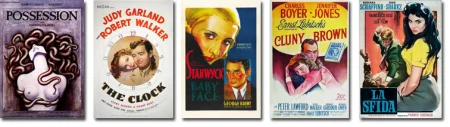
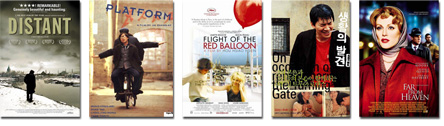
Bestof90sB

6. HEAT (Michael Mann, USA, 1995)
7. DREAM OF LIGHT (Victor Erice, Spain, 1992)
8. BREAKING THE WAVES (Lars Von Trier, Denmark, 1996)
9. MY SEX LIFE (Arnaud Desplechin, France, 1996)
10. BOOGIE NIGHTS (Paul Thomas Anderson, USA, 1997)


Runners-up: AND LIFE GOES ON and THROUGH THE OLIVE TREES (Abba Kiarostami), BLUE (Krzysztof Kieslowski), THE GARDEN (Derek Jarman), GOODBYE SOUTH GOODBYE (Hou Hsiao Hsien), THE HOURS AND TIMES (Christopher Munch), INSTITUTE BENJAMENTA (The Brothers Quay), IN THE COMPANY OF MEN (Neil LaBute), JEANNE LA PUCELLE (Jacques Rivette), THE LONG DAY CLOSES (Terence Davies), A MOMENT OF INNOCENCE (Mohsen Makhmalbaf), NAKED LUNCH (David Cronenberg), NIL BY MOUTH (Gary Oldman), NOUVELLE VAGUE (Jean-Luc Godard), PORTRAIT OF A LADY (Jane Campion), PULP FICTION (Quentin Tarantino), STONE (Alexander Sokurov), THE THIN RED LINE (Terrence Malick).


h1

Woolly Hats and Jump Cuts: The Touch

November 6, 2009

THE TOUCH

This is a post I started writing in the summer of 2008 and then abandoned for some reason, but since this unmissable film is playing this evening at MoMA I thought I’d resurrect it in its unfinished form.

The Touch is Ingmar Bergman’s Zabriskie Point: an English-language detour made at the height of its director’s international reputation that, because the eyes of the world were upon it, suffered far worse from critics than it might have done and gained an undeserved reputation as a giant turkey. Rarely seen, and unavailable on DVD, New York’s cinephiles were treated last Thursday to Elliott Gould’s personal print of the film. I had seen it on VHS*, back in the mid ’90s, but I remembered almost nothing about it beyond the fact that it was much better than I’d expected.

Usually when I see a film that I haven’t seen in over a decade there is one striking, unusual scene, or sometimes just a gesture, that unleashes some buried synapse in my memory banks. With The Touch there was little that I could recall having seen before, beyond, for some reason, Bibi Andersson’s woolly hat. That hat plays a pivotal role in the film’s most egregious scene: a what-not-to-wear montage of Bibi getting ready for her first tryst, scored to Burt Bacharachesque barbershopping and filmed with—zut alors—jump cuts! It’s like nothing else in the entire Bergman canon, but it’s very like scenes you’ll have seen in Julia Roberts, Meg Ryan or Lyndsay Lohan movies. But was Bergman the first to explore this particular cinematic dead-end?

Since I never got around to discussing much more about the film, let me just quote from MoMA’s synopsis: The Touch is a low-key, intimate drama set on the island of Gotland, just south of the filmmaker’s home in Fårö. Shortly after her mother’s death, a Swedish woman has an adulterous affair with the American archaeologist friend of her doctor husband. Andersson creates a finely tuned portrayal of a woman facing a midlife crisis, and the sparsely lit, claustrophobic interiors and subdued autumnal exteriors are beautifully photographed by cinematographer Sven Nykvist. The Touch, a Swedish-U.S. coproduction, was shot and released in two versions: one with Swedish and English dialogue, and one entirely in English. The original bilingual version—the version released in Sweden and now presented in this Festival—has been unavailable for a long time.”


*What is the deal with this VHS cover that I found on eBay? “Produced and Directed by Lars Owe Carlberg”? “Screenplay by Ingmar Bergman”? Did Bergman hate this film so much that at one point he tried to disown it?

Meanwhile, an anecdote about meeting Gould and discussing The Touch here.

h1

Movie Posters of the Week

October 24, 2009

MPOTW_444

Since I’ve been writing Movie Poster of the Week for two years now, first here, and since March at The Auteurs Notebook, I thought it might be a good idea keep a directory of all my postings here, in reverse chronological order:


On The Auteurs:

The House of the Devil

The Imaginarium of Doctor Parnassus

Le Feu Follet (and the work of Hans Hillmann)

What? (and other Polanski posters)

The 47th New York Film Festival

Gummo (and other Harmony Korine films)

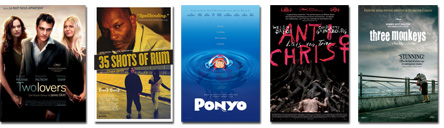
Antichrist

Husbands (and other French Cassavates posters)

Merman and Stolz der Nation (and other fake movie posters)

Independencia

Les herbes folles [Wild Grass] (and other Resnais posters)

The Endless Summer (and other surf movie posters)

The Servant (and other Losey/Pinter posters)

La femme de Paul, avec le sourire (the strange case of the lost Godard film)

Shadows of Forgotten Ancestors

Christmas on Mars (and the work of The Small Stakes)

Moon

The Serpent’s Egg (David Carradine R.I.P.)

Next Stop Greenwich Village (and the work of Milton Glaser)

The Taking of Pelham One Two Three

The Lacemaker (and the work of Peter Strausfeld)

The Devils

L’Atalante

The Rain People

The Holy Man (and the design work of Satyajit Ray)

In the City of Sylvia

The Girlfriend Experience

Late Spring


On this site:

Bruno

Objectified

Made in USA (and the work of Rene Ferracci)

Pickpocket (and the work of Christian Broutin)

The International

Dear Zachary (designed by Evan B. Harris)

Let the Right One In

Cool Hand Luke (R.I.P. Paul Newman)

The Headless Woman

Stranded

Day of Wrath

Getting Straight

Rosemary’s Baby

Burn After Reading

Three Monkeys

Alice in the Cities (designed by All City)

Forgetting Sarah Marshall/Local Hero

Last Year at Marienbad

The Bank Job

Offside

The Longest Yard

The Great Debaters/Carbon Copy

Taxi to the Dark Side

The Death of Mr. Lazarescu

Decline and Fall of a Bird Watcher

I’m Not There

Cloverfield

Be Here to Love Me (designed by Rob Jones)

Pierrot le Fou

The Savages (designed by Chris Ware)

Reprise (designed by All City)

Funny Games

A Brighter Summer Day

h1

Gloria Grahame night

August 13, 2009

the_big_heat_tcm

It’s Gloria Grahame night tonight on Turner Classic Movies. This poster is one of many superb updated posters TCM has produced for their Summer Under the Stars series. You can see them all here. I bow to few in my love of Gloria Grahame, whom I first became infatuated with after reading the tragic memoir written by her much younger British lover Film Stars Don’t Die in Liverpool.

Apologies to anyone keeping track (thanks Paul) for the poor state of disuse this site has fallen into over the past two months. Mostly I’ve been writing Movie Poster of the Week over at The Auteurs, and writing nonsense (and linking to less nonsensical things) on Twitter instead of T.W.I.T.T.. But I will try to keep house around The Wind in the Trees from now on.

h1

Shining Ephemera

June 10, 2009

In honor of The Shining midnight shows at the IFC Center.

A poster by Polish designer Leszek Zebrowski

Shining_Polish


A doorway mural on Oranienstrasse, Berlin (thanks to I Dreamed Music)

Johnny_mural


The worst wake-up ever: The Shining cuckoo clock by Chris Dimino (thanks to Engadget)

Shining_Cuckoo


Brilliantly oblique tribute poster from Tes One (courtesy of Grain Edit)

tes-one-poster


Poster by Jeff Kleinsmith for Rolling Roadshow screening of The Shining at the Timberline Lodge (the original Overlook Hotel) in Oregon in October 2008. 

shining_alamo


First edition of the Stephen King book

Shining_StephenKing


The movie soundtrack LP

shining-lp


The British teaser poster based on a Daily Mirror spread

Shining_UK_teaser


And, though everybody’s seen it, of course I need to add my favorite fake trailer (if not my favorite You Tube clip of all time)

Shining_YouTube

h1

White Ribbon Gold Palm

May 25, 2009

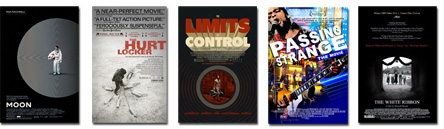
Michael Haneke finds redemption after Funny Games USA by channeling Bela Tarr and Carl Th. Dreyer to win the Palme d’Or yesterday for The White Ribbon.

h1

Pulp

May 9, 2009

Why didn’t I think of doing this when I was working in a second hand bookstore? Thomas Allen is an amazing artist who cuts up old pulp paperback covers and creates the most ingenious, cinematic dioramas: like a combination of cut-and-paste animator Lewis Klahr and plastic toy photographer David Levinthal, two of my favorite artists.

See lots more here.

h1

TWITT picks

May 3, 2009

The three best films currently playing in New York according to The Wind in the Trees.

h1

Movie Poster of the Month: Bruno

April 25, 2009

bruno

Perfect in every way, from typography to tagline to color scheme to use of ümlauts.

Meanwhile, an equally sublime Francis Ford Coppola poster on Movie Poster of the Week at The Auteurs.

h1

Sidney Poitier’s Warm December

April 24, 2009

I’ve been on a bit of a Sidney Poitier kick lately, inspired by reading Pictures at a Revolution, Mark Harris’s indispensable book about the five films nominated for the Oscar for Best Picture in 1967, two of which—Guess Who’s Coming to Dinner and In the Heat of the Night—starred the great Sir Sidney. I’ve enjoyed watching him, even in hokey pieces like Lilies of the Field and To Sir, With Love, but never more so than in this obscure 1973 London-set romance which I Netflixed purely on the basis of this poster. Poitier plays a brilliant, widowed DC “ghetto doctor” who travels with his 10-year-old daughter to London to race motorcycles (as one does) and falls in love with the alluring, beautiful and doomed niece of the ambassador from Torunda, a fictional East African nation.

A Warm December, just released on DVD for the first time (and seemingly only to pad out the Sidney Poitier Collection that it’s included in), was Poitier’s second film as a director. His first, the western Buck and the Preacher (1972), he had taken over the reins of midway through production. December was a flop, but Poitier went on to become a hugely succesful comic director, helming vehicles for Bill Cosby, Richard Pryor and Gene Wilder and for 20 years holding the record for the highest grossing film by an African-American director for 1980’s Stir Crazy, until Keenan Ivory Wayans bested him with Scary Movie in 2000. A Warm December, a rather corny and quite touching weepie, is shot like a TV movie, with zooms galore and a terribly dated score, but Poitier never aspired to be Jacques Rivette (despite his occasional experimenting with non-synchronous sound).

What interest A Warm December has, beyond its very charismatic leads, is mostly incidental: its London setting with its Afro-centric enclaves, a succession of fabulous patterned shirts (mostly worn by Poitier, except when he’s walking around with his shirt off), and its plot revolving around international diplomacy, motor-cross racing, hydro-electric dams and sickle cell anemia. There is also a wonderful performance by South African singer Letta Mbulu singing a Miriam Makeba song. And, best of all, a scene in a nightclub where Poitier and Esther Anderson dance to an Afro-funk outfit called Zubaba. Zubaba, it turns out, is the band formerly known as Symarip, best known for their 1969 ska anthem “Skinhead Moonstomp.”